GMO GlobalSign, Inc. expanded the commercial availability of TLS Connect to growing businesses across Asia Pacific and the Middle East today.
First launched in Western markets in April, TLS Connect delivers automated Certificate Lifecycle Management (CLM) specifically for small and medium enterprises (SMEs). Furthermore, the solution automates public trust TLS certificate deployment and renewal. In this way, SMEs may improve their digital security, ensure compliance, and minimize the risk of operational downtime.
In fact, GMO GlobalSign is a critical piece of the cybersecurity puzzle. Many SMEs now rely on public certificates but lack dedicated Public Key Infrastructure (PKI) experts. Automated certificate management tools thus remove the overhead of complex manual deployment.
This regional expansion comes as global browser standards push for shorter certificate validity windows. Specifically, CA/B Forum rules cut maximum lifetimes from 398 days down to 200 days on March 15, 2026. It will also further cut lifespans to 100 days in March 2027 and eventually to 47 days by March 2029.
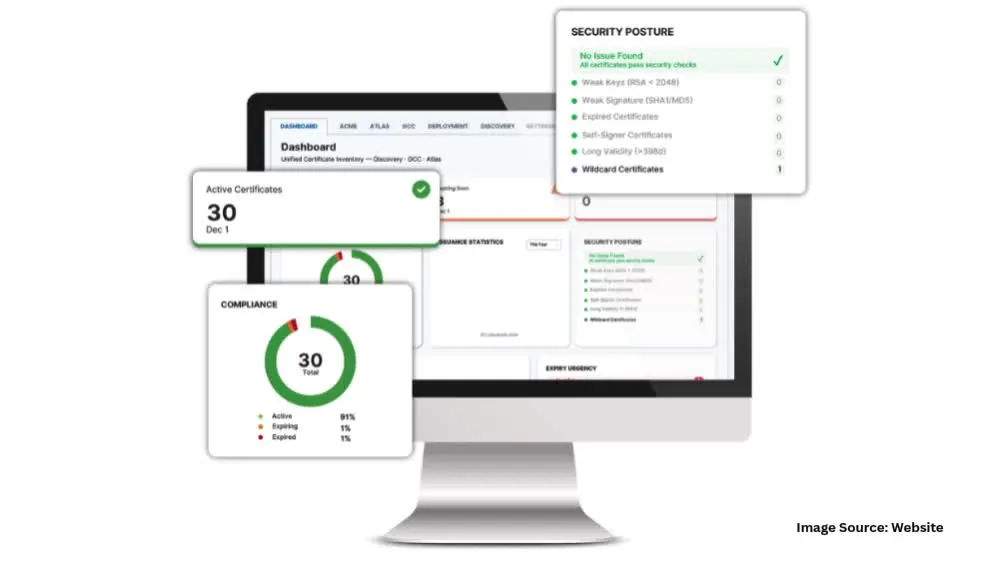
“TLS Connect has provided us with a user-friendly process, offering a single dashboard to control multiple nodes. While we have yet to explore all of its features, overall, TLS Connect is a time-saving and efficient app for managing TLS certificates,” said Chandra Mohana, Senior Officer & Support Engineer, Konkan Specialty Polyproducts Pvt. Ltd.
Enterprise-Grade Certificate Automation Designed for Regional SMEs
Notably, SMEs represent the vast majority of businesses across key regional economies. For example, small businesses make up 94% of all businesses in the UAE and 97% of Australian companies. Singapore and the Philippines are also dominated by SMEs, which account for 99% of all business entities.
Smaller businesses in these regional markets are also feeling the pinch of stringent cybersecurity rules. For example, Australia has the Security of Critical Infrastructure Act, and Singapore has the Cybersecurity Act. Similarly, India’s CERT-In requires basic cyber defense controls, and the UAE has its Critical Information Infrastructure Protection Policy. Meanwhile, the Philippines continues to implement its National Cybersecurity Plan (2023-2028).
However, with a global cybersecurity talent shortage at an all-time high, many small businesses are understaffed. ISC2’s 2025 Cybersecurity Workforce Study found that one-third of organizations lack sufficient security personnel. Thus, automated software deployment is important for regional business continuity.
“The challenge of managing TLS certificates is no longer limited to large enterprises,” said Aditya Anand, Head of Business Unit for TLS & CLM CA Division, GMO GlobalSign. “As certificate lifespans shrink, SMEs face the same risks of missed renewals and unexpected outages, often without the tools to manage them efficiently. TLS Connect by GMO delivers automated certificate lifecycle management designed specifically for smaller enterprises. For this reason, we believe TLS Connect by GMO will be well-suited to businesses across APAC and the Middle East as it is a simple, affordable way to stay ahead of certificate changes.”
In summary, TLS Connect provides built-in discovery tools, intuitive dashboards, and local endpoint controls. Thus, GMO GlobalSign helps regional businesses maintain continuous enterprise security and regulatory compliance efficiently.
For related updates on digital trust and cybersecurity, explore our SOC News.