Netmore Group, a leading Massive IoT network operator, and U.S.-based food safety software provider Ladle have issued an urgent warning. Specifically, both companies urge U.S. grocers, food service operators, distributors, and healthcare facilities to deploy independent temperature monitoring. This call to action follows two major waves of cyberattacks targeting supermarket refrigeration across Europe.
Overnight on October 11, attackers remotely switched refrigeration controllers at hundreds of French supermarkets into forced defrost. Consequently, this intrusion pushed some fridges and freezers to 50°C (122°F). Later, a second wave in early November struck stores across several additional European nations. On November 5, CISA, the FBI, and three other federal agencies issued a joint security alert. They warned that attackers actively target refrigeration controllers in U.S. grocery and cold storage facilities. Meanwhile, the Pentagon continues investigating recent freezer failures at U.S. military commissaries.
In many affected stores, the hijacked controller also served as the primary alarm system. Therefore, staff did not discover the spoilage issue until morning opening. Conversely, facilities with rapid temperature monitoring alerts kept inventory losses minimal. For example, France’s blood service lost zero product during the November 2 incident. Similarly, one Estonian store’s freezers rose only two to three degrees after staff responded within ten minutes.
“These attacks didn’t steal data. They turned up the heat on freezers,” said Todd Gebski, CEO of Ladle. “For a grocer or a hospital, that hits inventory, food safety, and patient care directly. You can’t control every system a contractor connects to the internet, but you can make sure you know right away when a temperature moves and have a plan for what happens next.”
“The monitoring that catches a refrigeration temperature attack needs its own secure path,” said Ove Anebygd, CEO, Netmore Group. “Networks built on LoRaWAN are separate from a store’s refrigeration controls and its business IT network, encrypted down to each sensor, and monitored around the clock. That way temperature data still gets through when other systems have been compromised.”
Securing Cold Chains With Independent Temperature Monitoring
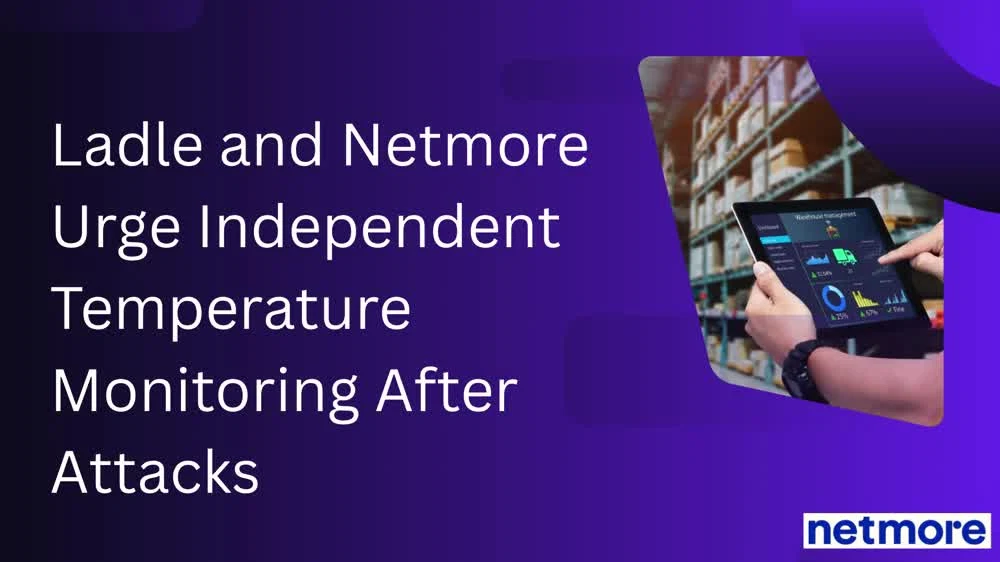
To provide a second set of eyes, ComplianceMate CTM by Ladle places wireless sensors inside coolers, walk-ins, and freezers. Crucially, these sensors operate completely separately from the primary refrigeration controls. The system performs temperature monitoring every 10 minutes and alerts staff immediately when conditions drift out of range. Furthermore, it stores readings locally if signals drop and maintains an exportable history for inspectors and insurers. Because ComplianceMate only reads temperature and humidity, hackers cannot use it to alter equipment settings.
Netmore provides the dedicated wireless network infrastructure for Ladle’s solution. This infrastructure is based upon a standard with secure functionality built-in. It uses 128-bit AES encryption with two layers of encryption and unique keys on all of the sensors. Each device in the network can be authenticated using the unique network session key, and any messages will be verified as unchanged. The application session key provides end-to-end encryption of the temperature data right to the application. This means that operators can verify the data is real without exposing any sensitive data.
For related updates on digital trust and cybersecurity, explore our SOC News.
News Source: Businesswire