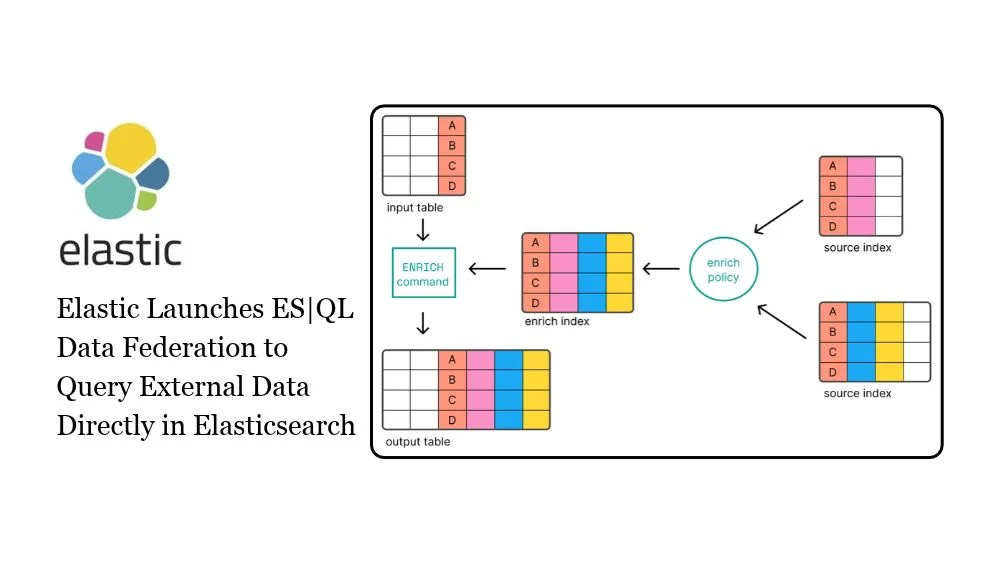
ES|QL Data Federation removes this requirement by bringing it directly to externally stored data. Consequently, security teams can detect threats and investigate archived logs without moving data. Compliance teams can also access historical records using their existing tools. Additionally, analytics teams can combine Elasticsearch data with external sources. This provides important context for applications and AI agents. They can access this information through ES|QL without requiring another processing engine.
“Customers wanting to enrich their Elastic-powered experiences with more data have had to choose between replication and compromise,” said Ajay Nair, general manager, Elasticsearch and Platform, Elastic. “ES|QL Data Federation changes that. Customers can now use the same FROM syntax, Kibana dashboards, and detection rules across indexed data and Amazon S3 in a single query, with no orchestration layer or second engine needed.”
Expanding Elastic’s Data Storage Capabilities
ES|QL Data Federation also fits with Elastic’s storage tiers. Frozen tier snapshots let organizations keep and ask questions about Elasticsearch-indexed data in object stores.
Meanwhile, the new ability spreads this flexibility to data that lives directly in cloud object stores. Organizations can now ask questions about information that has never been put into Elasticsearch. With ES|QL Data Federation, Elastic wants to make it easier to reach distributed data. It also helps organizations use information for security, analytics, and AI‑powered experiences.
To explore how Security Operations Centers (SOC) play a crucial role in defending against modern cyber threats, read our latest SOC News.
News Source: Businesswire.com,