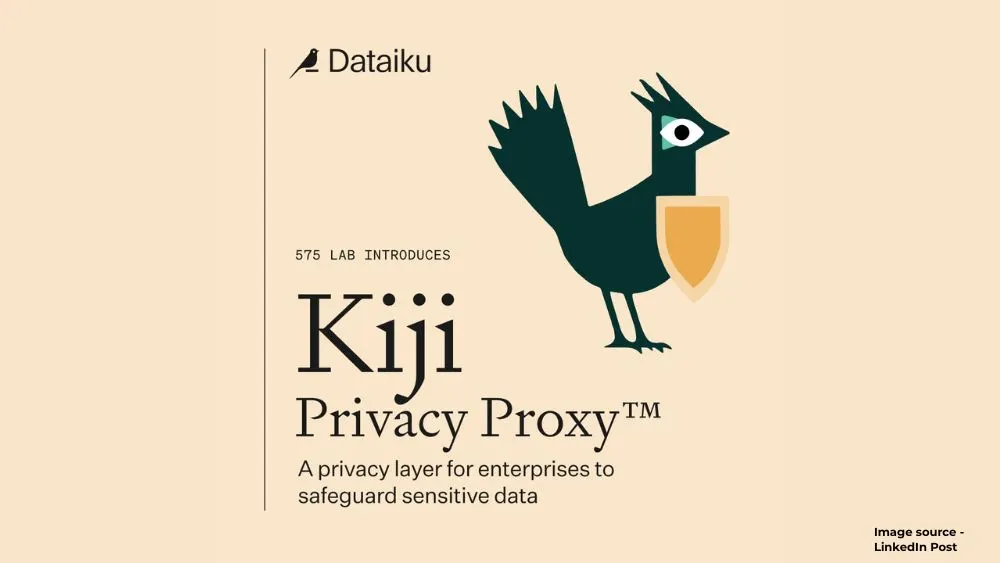
Dataiku launched Kiji Privacy Layers for AI generators on an international level. It ensures that the sensitive data is kept within the organization during the use of the outside models. It can be used in conjunction with trusted platforms like OpenAI and Anthropic without disclosing any personal data. Firms want quick results from AI; yet, they worry about serious data breaches. On this basis, Dataiku came up with a solution for the need for privacy today. The management welcomed safe automation in different departments today.
Staff members were working with more security today. The Kiji Privacy Proxy was created by the Dataiku 575 Lab with open source aspirations. Their primary concerns include privacy, transparency, and ethical use of AI worldwide. They examine names, email addresses, and financial data before any request. Then it swaps realistic placeholders and protects confidential information immediately. Returned answers restore original values and preserve smooth experiences everywhere. Clients praised simple rollout and steady governance benefits early.
Secure Growth
“With the rise of AI using closed-source models, employees are pouring sensitive data into AI systems faster than enterprises can secure it,” said Hannes Hapke, Head of Dataiku’s 575 Lab. “That’s not just a technical issue, it’s a governance failure waiting to happen. Kiji Privacy Proxy gives organizations a way to scale AI responsibly, without putting sensitive data and ultimately customer trust on the line.”
The product fits real workflows and avoids costly operational delays. Users run desktop versions, while teams deploy secure servers easily. Traditional tools often need rewrites, but this solution avoids changes. Most management teams opted for fast implementation with less disruption. It requires no prior edits, applications, redesigns, nor infrastructural upgrades. It becomes instant and easy to achieve privacy protection. In addition to traditional PII detection, they implement their own domain detection policies. They detect their own proprietary codes and regional formats with high accuracy. Sectors that are highly regulated can now have better control over their implementations. For auditors, it is always clean and traceable.
To explore how Security Operations Centers (SOC) play a crucial role in defending against modern cyber threats, read our latest SOC News.
Source: Businesswire